


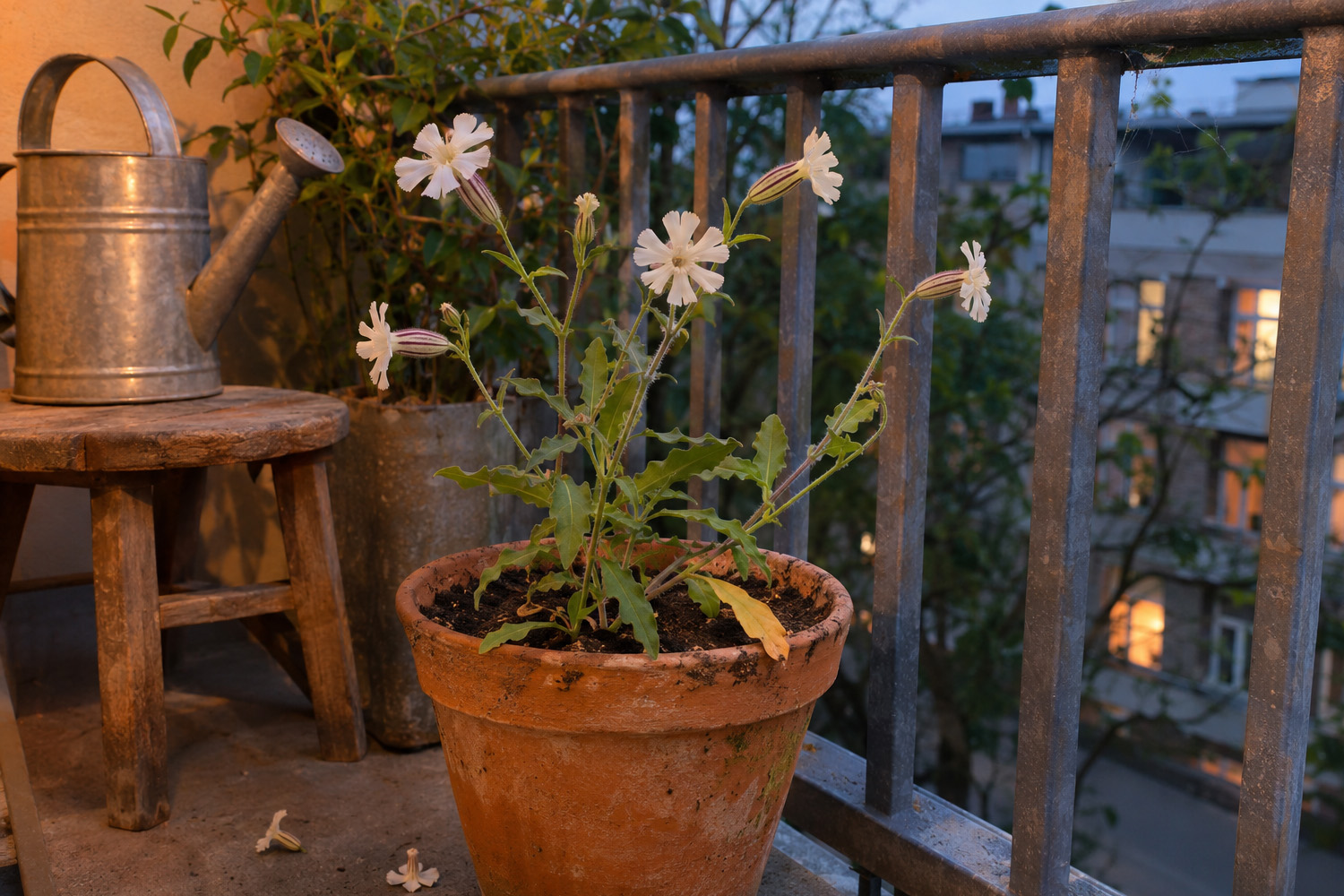
African dream root is the root of Silene capensis, a small biennial or short-lived perennial from South Africa with white flowers that open in the evening. The Xhosa call it undlela zimhlophe, "white paths". Diviners traditionally use the root to dream vividly. In this post you'll learn what the plant is, how to recognise it, how it differs from Entada and how to grow it yourself from seed.
What is Silene capensis?
Silene capensis, also known as Silene undulata, belongs to the carnation family (Caryophyllaceae). It grows wild in the Eastern Cape of South Africa, in grasslands and open areas. Among the Xhosa, the root is a well-known tool of the amagqirha, the traditional diviners. They use it to make dreams clearer and easier to remember, because in their tradition dreams are seen as messages from the ancestors.
How to recognise Silene capensis
- Flowers: white to cream, with deeply cut petals. They open at dusk and smell sweet.
- Calyx: long and tubular, with fine green or purple veins.
- Leaves: narrow, slightly hairy and wavy at the edges.
- Root: thick, fleshy and branched, with light brown bark.
African dream root or African dream herb?
The names are similar, but they're two very different plants.
| Name | Plant | Part |
|---|---|---|
| African dream root | Silene capensis (carnation family) | Root |
| African dream herb | Entada rheedii (legume family) | Large seeds or beans |
Read more about Entada in our post on African dream herb and lucid dreaming.
What does it contain?
Which compound is responsible for the dream effect hasn't been worked out yet. Triterpenes have been found in the root, and probably saponins too, but scientific research on its effects in humans is scarce. What we know about the plant comes mainly from ethnobotanical research among the Xhosa and from personal reports. There are no approved health claims for Silene capensis.
Which form suits you?
| Product | Form | Best for |
|---|---|---|
| African Dream Root seeds | Seed | When you want to grow the plant yourself |
| Dream herbs | Category | When you want to compare other dream plants |
Want to know what dream herbs do in general first? Read our post on the effects of dream herbs.
Growing Silene capensis from seed
- Sow in spring. Use an airy, sandy seed compost and press the seeds in lightly. Barely cover them.
- Keep it warm and slightly moist. At around 18 to 22 °C (64 to 72 °F) the seeds usually sprout within a few weeks. Don't let the soil dry out, but don't keep it wet either.
- Pot on in time. Once the seedlings have a few true leaves, move them into a deep pot, as the root grows long.
- Choose a sunny spot. A balcony, south-facing windowsill or greenhouse works well. Water moderately.
- Overwinter frost-free. In cooler climates, bring the pot inside before the first frost and keep it somewhere cool and bright.
The root takes a few years to thicken. Patience is part of it.
Common mistakes
- Sowing too deep: the fine seeds need light and won't come up.
- Too much water: a fleshy root rots quickly in wet soil.
- A pot that's too small: the root grows downwards.
- Leaving it outside in winter: the plant isn't frost-hardy in northern Europe.
- Confusing it with Entada: they're different plants with a different tradition.
Safety
- Little research: not much is known about the safety of the root in humans.
- Saponins: in large amounts, saponins can cause nausea or vomiting. Among the Xhosa the root is also used as an emetic.
- Medication: if you take medication, talk to a doctor first.
- Pregnancy: do not use during pregnancy or breastfeeding.
Avalon doesn't give recipes or personal usage advice, and all our products are for adults aged 18 and over only. See Erowid for more background.
Is African dream root legal?
Silene capensis isn't on any list of controlled substances in the Netherlands, the US or most European countries. In the UK, the Psychoactive Substances Act 2016 can apply when a plant is sold for consumption. Seeds can be sold freely as an ornamental plant or collector's item. Rules vary by country and can change, so always check the law where you live.
Frequently asked questions
What does undlela zimhlophe mean?
It's Xhosa for "white paths" or "white ways", a reference to the white flowers and to the path that dreams are said to open.
Is African dream root the same as African dream herb?
No. African dream root is Silene capensis, African dream herb is Entada rheedii.
When does Silene capensis flower?
Mainly in spring and summer. The flowers open in the evening and close again during the day.
Can I grow Silene capensis outdoors?
In summer, yes, in a pot in a sunny spot. In regions with frost it has to come inside for the winter.
How long until the root is fully grown?
Count on a few years. The roomier the pot and the better the spot, the faster the root grows.
Where can I buy seeds?
At Avalon you'll find African Dream Root seeds in the smartshop.
Sources: Sobiecki (2008) "A review of plants used in divination in southern Africa", Hirst (2000) "Root, dream & myth: the use of the oneirogenic plant Silene capensis among the Xhosa", Eleusis 4, Wikipedia "Silene undulata", Erowid.


