

Surgeons knew this root better than we do
Search for “mandrake” and within thirty seconds you will find a screaming root. Harry Potter made the image famous, but the story is far older. Pliny the Elder wrote about it, and medieval herbals warned that hearing the root’s cry could kill you on the spot.
Great story. But the real reason to be careful with Mandragora officinarum has nothing to do with sound.
Dioscorides wrote in the first century AD that physicians steeped the root in wine before operating. That wine worked. Patients lost consciousness and felt nothing during surgery. The Hortus Sanitatis repeated the recipe in 1497, adding a warning: too much and the patient died. That was not superstition. Mandrake wine was one of the first documented forms of anaesthesia in Western medicine.
The root does not contain what most sources claim
Pick up any herbal reference and you will read that mandrake contains scopolamine. It does not. Research from the University of Haifa shows that Mandragora officinarum lacks the functional gene to convert hyoscyamine into scopolamine. The enzyme is present but does not work.
So what is actually in there? Mostly hyoscyamine, up to ten times more than in related nightshades. And atropine, which is really just racemised hyoscyamine, the same compound in a slightly different molecular arrangement.
Hyoscyamine blocks acetylcholine in your nervous system. Dry mouth, dilated pupils, rapid heartbeat, confusion. At higher doses, hallucinations and unconsciousness. Go a little further and you stop breathing. We at Avalon sell the mandrake seeds for growing as an extraordinary plant, not for consumption. And we are upfront about that.
From Pliny to Joan of Arc
The screaming root story probably originates with Flavius Josephus, the Jewish-Roman historian from the first century. He described a plant called baaras that produced a deadly sound when uprooted. The medieval solution: tie a dog to the root and lure the animal away. The dog dies, you don’t.
Pliny repeated it. The medieval herbals went further. The root had a human shape and screamed like a baby. Twelfth- and thirteenth-century illustrations show little men with leaves on their heads, tied to dogs. It sounds comical, but people took it with deadly seriousness.
During Joan of Arc’s trial in 1431, her judges accused her of carrying a mandrake root. That was not a botanical observation. Possessing a mandrake root was considered proof of witchcraft.
Flying ointments with henbane and belladonna
The witchcraft connection goes beyond superstition. Medieval recipes for so-called flying ointments consistently list the the same three plants: mandrake, henbane and belladonna. All three nightshades, all three packed with tropane alkaloids.
Witches supposedly rubbed this ointment onto their skin and then experienced the sensation of flight. Sounds absurd? The pharmacology makes it less strange than you might think. Tropane alkaloids are absorbed through the skin. At high doses they produce vivid hallucinations, disorientation and the loss of any sense of gravity. Someone under the influence of these compounds could genuinely have felt they were flying.
Did it actually work that way? We do not know for certain. But the chemistry checks out. Henbane contains the same alkaloids as mandrake and has been used as a sedative for thousands of years.
Growing mandrake from seed takes patience
Want to grow your own mandrake? Prepare to wait. The seeds need cold stratification first: one to three months in moist sand at 1 to 5 degrees Celsius, in the fridge. Without that cold period they simply will not germinate.
And then it really starts. Germination takes eight to twelve months. Yes, months! Many growers give up halfway and throw the pot away while the seed is still sitting there, quietly getting ready.
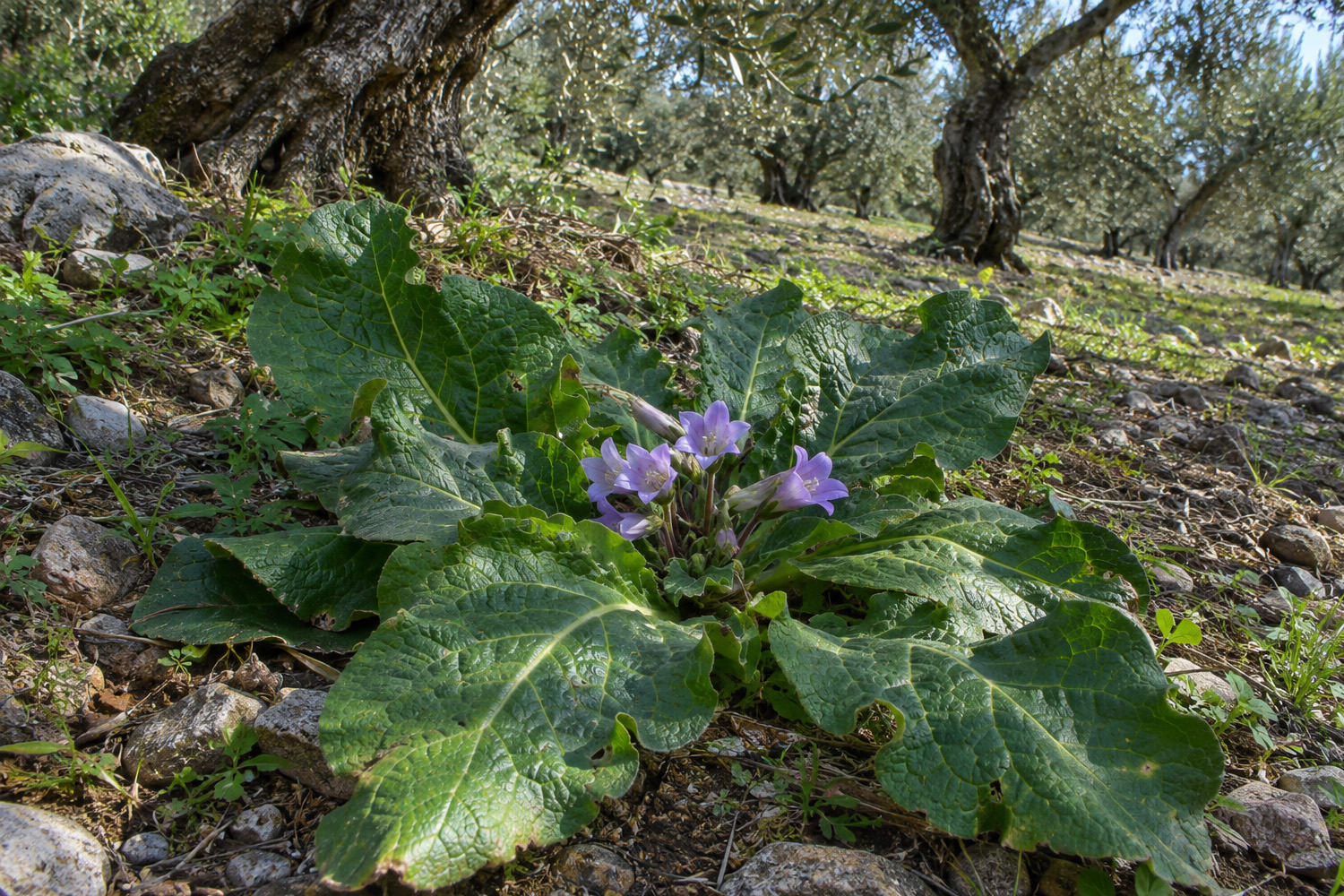
When it does sprout, you get a striking rosette plant with wrinkled, dark green leaves. The root grows deep and fleshy, sometimes forking into a shape that vaguely resembles a human body. That is where all those medieval illustrations come from.
The plant needs a deep pot of at least 30 centimetres, sandy and slightly alkaline soil, partial shade. Give it a dry rest period in summer, then water generously. Some growers report flowering after eighteen months, others wait three to four years.
Mandrake is entirely legal in the Netherlands and across the EU. It is not on any controlled substances list. In our exotic seeds collection you will find Mandragora officinarum seeds alongside related species like henbane. We also have a growing guide for Hawaiian baby woodrose if you want to try more exotic seeds.
In our opinion, mandrake is the single most fascinating plant we carry. No other seed in the shop comes with two thousand years of mythology attached. But keep it away from children and pets. The alkaloids are in every part of the plant, including the leaves and the yellow fruit. Beautiful to grow, dangerous to ingest.